Awareness
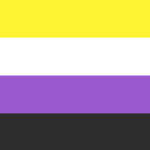
This year, Non-Binary Awareness Week takes place from July 14 to 20, 2025. It is a time to highlight the experiences of non-binary people, challenge misconceptions, and encourage greater understanding across communities.
While the term non-binary has become more familiar in recent years, the experiences and identities of non-binary people are not new. Across cultures and throughout history, people have expressed gender in ways that go beyond the categories of male or female.
What does non-binary mean?
At its simplest, non-binary is a term for gender identities that do not fit strictly into the categories of man or woman. Some non-binary people may feel like a mix of both. Others may feel like neither. Some may identify as gender fluid, agender, bigender or in other ways that reflect their own experiences.
It is important to remember that there is no one way to be non-binary. Just as gender expression varies among men and women, the same is true for non-binary individuals. How someone looks, dresses or expresses themselves does not define their identity.
Why awareness matters
Non-binary people continue to face barriers, including misunderstanding, lack of legal recognition, discrimination and violence. Research and community reports show that many non-binary individuals feel pressure to fit into the binary for safety or acceptance, which can affect mental health and well-being.
Awareness weeks like this one create space for conversation, education and change. They remind us that gender diversity has always existed, and that building inclusive communities means respecting all gender identities.
A part of Canadian history and future
Here in Canada, non-binary people have always been part of the 2SLGBTQIA+ community and the broader social fabric. Many Indigenous cultures have long recognized gender-diverse individuals, including those who identify as Two-Spirit. This term is used by some Indigenous people to reflect a sacred and historical understanding of gender beyond the Western binary.
In recent years, Canada has made progress in recognizing non-binary identities, such as offering gender-neutral markers on identification documents in some provinces and territories. But there is still work to do to ensure that non-binary Canadians have access to safety, healthcare, legal rights and respect.
How can you show support
- Listen to and amplify non-binary voices
- Respect people’s names and pronouns
- Learn about the experiences of non-binary individuals
- Advocate for inclusive policies and spaces
At the Canadian Pride Historical Society, we believe understanding the past helps build a more inclusive future. Non-Binary Awareness Week is a reminder to listen, learn and support the non-binary community, not just during this week, but as part of how we show respect for one another every day.