As 2025 wraps up, the Canadian Pride Historical Society has been reflecting on a year marked by new connections, hands-on education and steady growth. Across events and partnerships, CPHS continued its work of preserving and sharing Pride history in Canada in ways that feel accessible, local and community-led.
The year began in February with a Black History Month trivia night. Designed as both a learning space and a community gathering, it highlighted the importance of intersectional histories and the many stories that shape Pride in Canada.
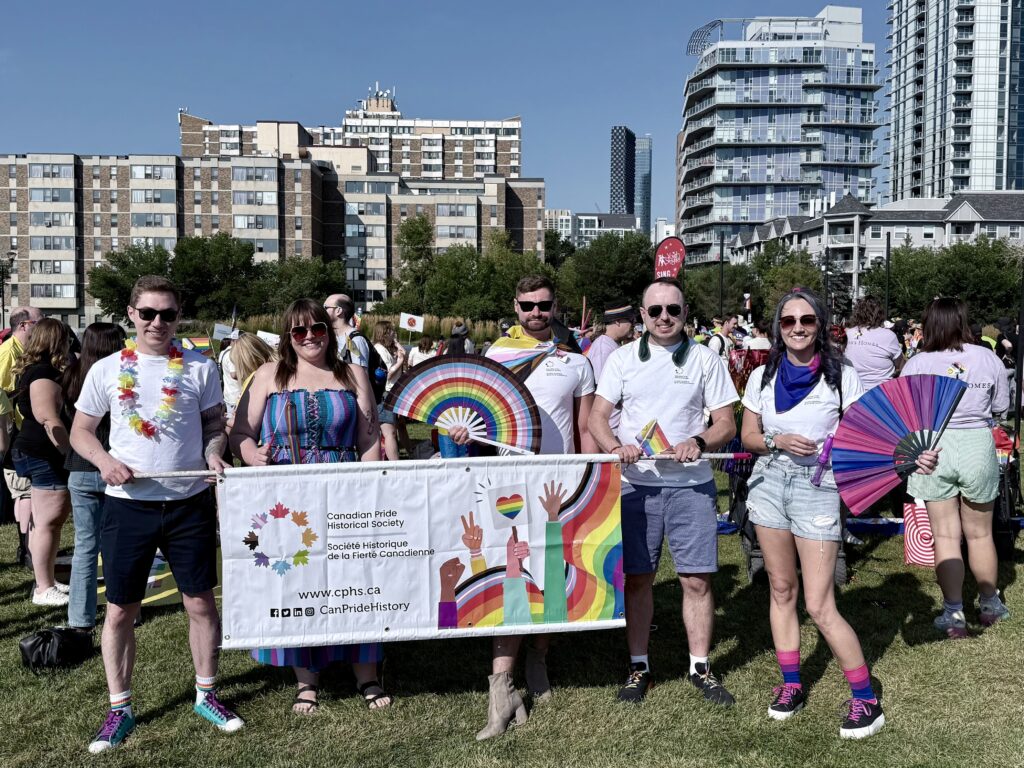
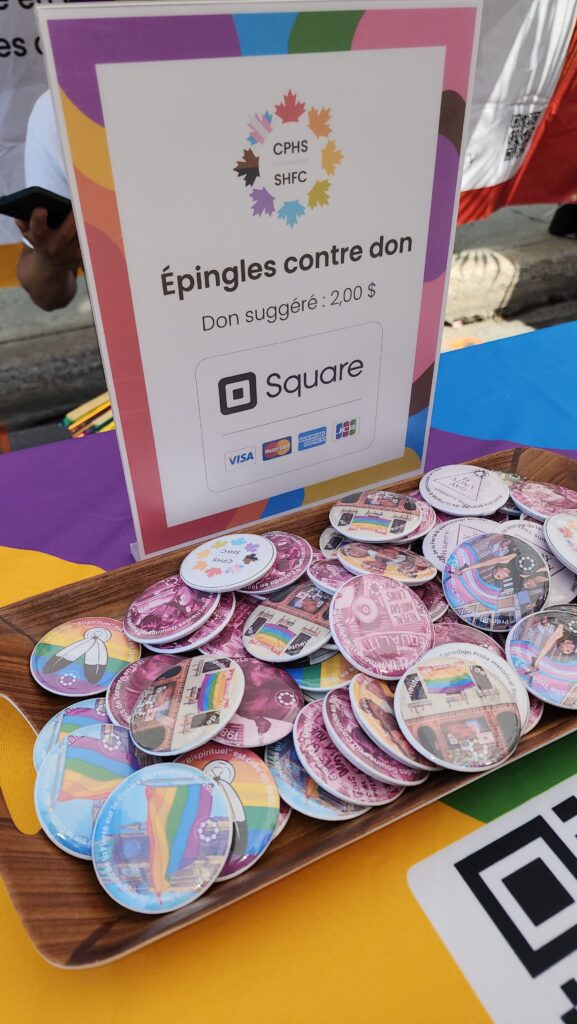
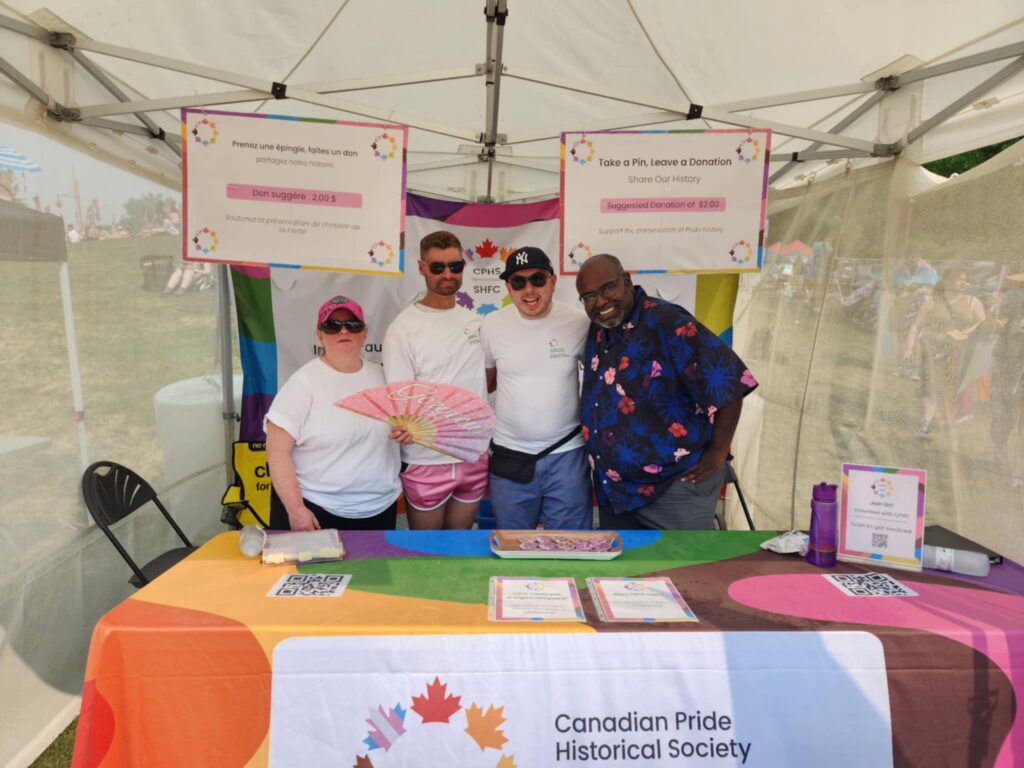
During Pride season, CPHS expanded its presence on the Prairies. In Winnipeg, CPHS marched in the Pride Winnipeg Parade and hosted its first festival booth, connecting with visitors eager to learn more about Pride history and the Society’s work. In Saskatoon, CPHS took part in the Saskatoon Pride Parade and Festival, continuing those conversations and building new relationships with community members and organizers.
August brought a string of moments that combined celebration with public history. In Montréal, CPHS hosted its first booth at Community Day and joined the Montréal Pride Parade. In Calgary, CPHS held a Drag Storytime on Aug. 28 with partners at Owl’s Nest Books, then marched in the Calgary Pride Parade on Aug. 31. These events captured what CPHS aims to do at its best: invite people in, spark curiosity and make history something shared.
In the fall, CPHS deepened its education and outreach work. An article by CPHS was published in the Fall issue of the Manitoba Social Science Teachers’ Association journal, MB Speaks, focused on how Pride history can support citizenship education in Canadian classrooms. CPHS also presented at the MSSTA professional development day. In November, CPHS presented at Indspire’s National Gathering for Indigenous Education in Winnipeg from Nov. 19 to 21, sharing a session exploring Pride history in Indigenous communities.
November also brought a milestone that will shape the organization’s future. CPHS has officially been granted charitable status by the Canada Revenue Agency (CRA), a significant step that will create new opportunities for funding, partnerships and impact.
This milestone reflects years of effort from many people. CPHS extends sincere thanks to everyone who contributed time, care and persistence throughout this process.
With momentum from 2025 and charitable status now in place, CPHS looks ahead to 2026, focused on reaching more communities, supporting more educators and continuing to preserve and share Pride history across Canada.
Language has always shaped how Canadians see gender. For transgender and gender-diverse people, finding the right words has been an ongoing act of visibility and survival.
Before “transgender” entered everyday use, Canadian media and legal records often used medical or sensationalized terms. In the 1960s and 1970s, “transsexual” and “sex change” were the most common descriptors. These words were clinical and focused on physical transition rather than identity, yet they marked the beginning of national awareness. Early coverage, such as stories about Christine Jorgensen and later Canadian figures like Susan Gapka, brought gender variance into public view, though often through a narrow lens.
From “transsexual” to “transgender”
By the late 1980s, activists and community groups began promoting “transgender” as a more inclusive term. It reflected a broader understanding that not all gender-diverse people seek surgery or medical transition. The shift was about self-definition and autonomy over language.
In Canada, organizations such as Egale Canada and the Gender Identity Clinic at Toronto’s Centre for Addiction and Mental Health helped introduce and normalize the term. This coincided with an international move toward recognizing gender diversity as a social and human rights issue rather than a medical condition.
Media, policy, and the power of words
Canadian journalists initially struggled to adjust. Reports often relied on outdated terminology or misgendered individuals. In the 1990s and early 2000s, trans advocates began working with editors and educators to guide inclusive language use. The Canadian Press Stylebook, CBC’s internal language guide, and LGBTQ2+ media resources gradually adopted “transgender” as standard.
Policy reform also shaped how Canadians talked about gender. Beginning in 2012, provinces such as Ontario and Manitoba added “gender identity” and “gender expression” to human rights codes. When the federal government followed suit in 2017 through Bill C-16, legal definitions reinforced consistent terminology across institutions.
While “transgender” was gaining ground in policy and media, Indigenous peoples were revitalizing the term “Two-Spirit.” Emerging in the 1990s from within Indigenous LGBTQ+ communities, it described pre-colonial understandings of gender diversity and spiritual roles. Two-Spirit leaders reframed national dialogue by reminding Canadians that gender variance had always existed on this land.
Words that keep evolving
The vocabulary around gender in Canada continues to grow. Terms such as “non-binary,” “gender-fluid,” and “gender-diverse” reflect a movement toward inclusivity and personal agency. Each new word signals progress in the collective understanding of identity.
For historians and archivists, recording how these terms change over time is vital. Through projects like those led by the Canadian Pride Historical Society, documenting shifts in language helps trace how Canadians have come to understand gender diversity.
September 30 is the National Day for Truth and Reconciliation. It’s a time to pause, reflect and learn about the legacy of Canada’s residential school system. For the Canadian Pride Historical Society, it’s also an opportunity to recognize a history that is often overlooked: the deep connection between Indigenous and 2SLGBTQIA+ communities through the role of Two-Spirit people.
The term Two-Spirit, created in 1990 at an Indigenous gathering in Winnipeg, is used by some First Nations, Métis and Inuit people to describe gender, sexual and spiritual identity in ways that existed long before colonization. It reflects the diversity of Indigenous cultures, many of which held space for individuals who embodied both masculine and feminine roles, or who carried unique responsibilities within their communities.
Colonial Disruption and Shared Erasure
These traditions were disrupted by colonialism. The residential school system, operated by churches and backed by the federal government, sought to erase Indigenous languages, ceremonies and identities. That suppression extended to the persecution of Two-Spirit people. What had once been sources of respect and belonging became targets of stigma and punishment.
This shared history of erasure is one point where Indigenous and queer experiences intersect. Just as queer Canadians have faced criminalization, invisibility and violence, Indigenous peoples have faced systemic attempts to suppress their cultures and ways of being. For Two-Spirit people, those burdens are doubled.
Resurgence and Solidarity
Today, many Two-Spirit leaders are reclaiming their place in their communities and in the broader 2SLGBTQIA+ movement. They are artists, activists, Elders and youth who speak to both resilience and resurgence. Their voices remind us that reconciliation isn’t only about acknowledging harm, but also about restoring traditions that colonialism tried to erase.
For non-Indigenous members of the 2SLGBTQIA+ community, solidarity begins with listening. Learning about the meaning of Two-Spirit identity and the diversity it represents is a step toward respect. Supporting Indigenous-led initiatives, attending events where Two-Spirit people are centred and making room for their stories within Pride spaces are concrete ways to act.
Relationships, Commitment, and Hope
Truth and reconciliation are not abstract ideas. They are lived through relationships; through the choices we make about who we uplift and how we remember the past. On this day, it’s important to honour survivors of residential schools and their families. It’s also important to recognize that Indigenous queer and trans people continue to carry histories that are both painful and powerful.
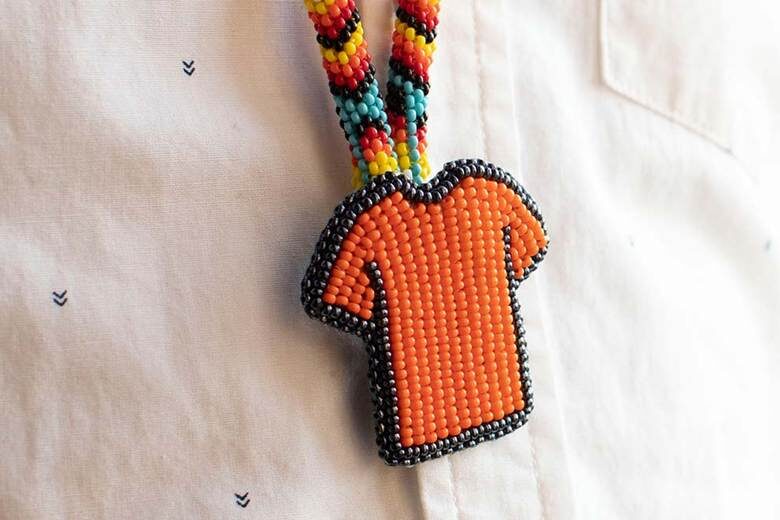
The Canadian Pride Historical Society is committed to preserving stories of 2SLGBTQIA+ Canadians, and that includes standing alongside Two-Spirit people whose histories are an integral part of this country. On September 30, we encourage everyone to wear orange, reflect on the truths of residential schools, and also learn more about the role of Two-Spirit people in Indigenous communities.
Reconciliation requires honesty, but it also requires hope. By acknowledging the intersections of our histories, we can work toward a future where Indigenous and 2SLGBTQIA+ voices are not just heard but celebrated.
The choice of date for Women’s Equality Day commemorates the signing of the 19th amendment on August 26th, 1920, a landmark addition to the American constitution that prohibited federal and state governments from restricting the right to vote based on sex. While this was a massive achievement only made possible by the work of dedicated activists, it is crucial to note that only a small proportion of American women were subsequently able to vote—women of colour had to fight decades more in order to obtain the same right. New York Congresswoman Bella Abzug first introduced a resolution to recognize Women’s Equality Day in 1971, the year after the America-wide Women’s Strike for Equality, and the date was first formally celebrated two years later in 1973. Fifty-two years later, it remains an important remembrance of the first step to justice that was long-overdue.
The work of American suffragettes such as Susan B. Anthony is well known even outside her country, but the history of the Canadian women’s suffrage movement is no less rich, and no less important. The first victory in the struggle was won on January 27th, 1916, when Manitoban women—of British ancestry or citizenship, and who were at least 21 years old—gained the right to vote in provincial elections. This was a hard-earned win, preceded by efforts from groups such as the Manitoba Political Equality League, who had presented two petitions in support of women’s right to vote on December 23rd of the previous year. The petitions were signed by both men and women, and included almost forty thousand signatures. Other provinces quickly followed suit, with Saskatchewan enacting it’s own reform less than two months later, and Alberta a little over a month after that. BC, Ontario, and Nova Scotia followed in turn, and eventually the last province to provide this essential right was Québec, in 1940, with the last territory being the Northwest Territories in 1951. On a federal level, it was on May 24th, 1918 that women were formally allowed to vote in federal elections. World War 1, and the Wartime Elections and Military Voters acts, had permitted women in the armed forces and the female relatives of military officers to vote, but the 1918 act distributed the right far more broadly—although not comprehensively. If you’d like to learn more about the timeline of the fight for equal voting rights, the Canadian Encyclopedia has an excellent resource online, which can be found here.
It is critical to note that not all women were granted the same rights at the same time. Racialized women across Canada had to fight far longer and harder to secure the same rights as white, British women, particularly Asian and Indigenous communities. The passing of the national Dominion Elections Act in 1920 filled some of the gaps—it enfranchised those who had been disenfranchised during the Great War, such as those from countries Canada had been at war with— but crucially, stated that those disenfranchised due to race on a provincial level would remain as such. This included those of Chinese origin in Saskatchewan, and in BC, included those of Chinese, Japanese, South Asian, and Indigenous origin. These injustices would only begin to be rectified without exception in the 1940s, and Chinese and South Asian citizens—men and women both—were extended the right to vote both federally and provincially on the first day of 1947. Japanese-Canadians and Indigenous women would need to wait even longer still, until 1949 for Japanese-Canadians.
Indigenous women faced a still more arduous battle for their rights, complicated by the Indian Act. Over the 50s and 60s, province-by-province ‘Status Indians’ were granted the provincial vote, but the clause in the Indian Act that stated Indigenous women lost their ‘status’ if they married anyone without a ‘status’ meant that thousands of Indigenous Women remained disenfranchised and withheld from their right to vote. Organizations such as the Native Women’s Association of Canada worked tirelessly for years to rectify this injustice, and the UN Human Right’s Commission even declared that the loss of ‘status’ was tantamount to cultural interference. The dozens of years of hard work and tenacity finally came to bear fruit on June 17th, 1985, when Bill C-31 was passed, amending the Indian Act to remove the gender-based discrimination it contained in it’s provisions. 67 years after British Manitoban women gained their right to vote, the right had finally been distributed to almost all Canadians, regardless of race. Three years later in 1988, the very last gap was closed, and people with intellectual disabilities were able to vote for the first time. Canada had finally become a true democracy for all.
Voting inequalities, however, still exist today—often based on physical access to the vote. For instance, Nunavut women were able to vote starting in 1950, but in remote communities, ballot boxes were only installed in 1962, and as such all genders were denied the vote. Disabled people can also face difficulties getting to a voting centre, something that—although mail-in voting has been helpful—remains a pressing concern today. The vote is an essential part of any functioning democracy, and it is important that as we celebrate how far we’ve come, we recognize how far we still have to go.
Women’s Equality Day is a sobering reminder that a shocking amount of the rights and freedoms we claim today were won incredibly recently, sometimes even in living memory. As politics both here in Canada and around the world seem to grow ever more frightening, and the rights we are all entitled to become something considered to be up for debate, looking to and learning from the past only becomes more important. The perseverance and courage of those who fought tirelessly for every woman’s right to participate in democracy continues to serve as an inspiration to those fighting for every sort of justice, and on this day, we pay homage and thanks to their efforts.
Since 2012, International Non-Binary People’s Day has been celebrated every year on July 14th—the date chosen for its placement at the halfway mark between International Women’s Day and International Men’s Day. The day—and Non-Binary Awareness Week, which begins on the preceding Monday—is a time for us to recognize, celebrate, and uplift non-binary folks around the world, learn about the diverse ways non-binary people move through life, and reaffirm our commitments to advancing the cause of non-binary rights in any way we can.
Non-binary people live their lives all around the world, and have since humanity first came into existence. References to what we’d now describe as non-binary identities can be found in some of the earliest records we have access to, such as a Sumerian creation myth from the 2nd millennium BCE, where the goddess Ninmah created a being “with no male organ and no female organ.” In the same Mesopotamian culture, it has also been argued that some of those who worked in the temples of Inanna/Ishtar were also considered to be a ‘third gender,’ neither man nor woman. In other ancient cultures, such as those from the Greco-Roman world (described in Plato’s Symposium) and northern Thailand, it’s proclaimed that there were three ‘sexes’ present in humanity at its creation. Across the sea, the cultures of Mesoamerica are likewise thought to have recognized gender as fluid and on a spectrum. The Maya revered an androgynous deity of maize, as well as a moon goddess who presented as masculine, and anthropologists have claimed that at the height of the Mayan classical period, rulers tended to present themselves as “embodying the entire range of gender possibilities, from the male through the female.” The Inca likewise placed great importance on the quariwarmi (men-women) who served Chuqui Chinchay, a jaguar deity.
It is no surprise that today, non-binary and ‘third-gender’ identities continue to exist around the globe, with experiences as varied as the colours in a rainbow. Many Thai people consider kathoeys to be an example of a third gender, though it must be said, not all agree on this definition. Elsewhere in Southeast Asia, the Bugis people of South Sulawesi, Indonesia, recognize five distinct genders: makkunrai, oroané, calabai, calalai, and bissu, which can be roughly translated as cis women, cis men, trans women, trans men, and androgynous or intersex people, respectively. Once again, not everyone agrees on the classification of the latter three genders as ‘third genders,’ but it is indisputable that those who identify as such occupy a distinct social role besides ‘man’ or ‘woman.’ Many Polynesian cultures likewise recognize those who are not simply ‘man’ or ‘woman,’ with people such as the māhū of Native Hawaiian and Tahitian cultures, the fakaleiti of Tongan culture, and the fa’afafine of Samoan culture being respected and loved members of their communities. Hijras in South Asia (also known as aravani and khawaja sira) have long been an integral part of their societies, often living together in well-defined, all-hijra communities with their own unique culture, such as the guru-chela kinship system.
In Canada and Turtle Island (North America) as a whole, the term two-spirit is often used as an umbrella term to describe the vast and varied ways Indigenous people viewed and expressed gender. It is crucial to note that it is very much an umbrella term, meant for wider audiences, because Indigenous cultures are all unique and all have their terms and concepts in regards to gender. The term was created over five conferences by several participants, concluding with the Third Annual Inter-tribal Native American, First Nations, Gay and Lesbian American Conference, held in Winnipeg in 1990. The English term was what was first developed and proposed, although the Ojibwe translation niizh manidoowag was swiftly constructed to honour the peoples whose land the conference was held on. Michelle Cameron, a two-spirited woman of the Carrier First Nations, wrote that “The term two-spirit is […] an Aboriginal-specific term of resistance to colonization and non-transferable to other cultures. There are several underlying reasons for two-spirited Aboriginals’ desire to distance themselves from the mainstream queer community.” The writer of this piece is not Indigenous, and thus I doubt my ability to provide a full, accurate, culturally-knowledgeable description of the meaning of the word ‘two-spirit’ to Indigenous people, as well as the identities and cultural concepts it represents. Therefore, I highly suggest that you seek out the writings and experiences of two-spirit people to truly learn what the term means to them and how it is expressed.
It is extremely important to note, when learning about these various identities and expressions from a Western, English-speaking point of view, that our terminology and understanding of gender and non-binary identities might not be accurate to how the people with these lived experiences will describe themselves. We must always remember to listen first and foremost to the voices of those whose identities we are discussing, and use whatever terminology and/or labels they ask us to. Being intersectional and culturally-conscious when discussing these sorts of things is crucial, as is understanding that some things are very hard to translate accurately into English. If you wish to learn more about the incredible diversity of gender expression and identity that can be found around the world—this article is an incredibly brief overview—once again, I heartily recommend seeking out the voices of those who exist in these identities, as they will be able to give you better insight than I ever could.
The current moment in history can feel quite heavy if you are anywhere in the LGBTQIA+ community, especially if you are trans or non-binary. There is much that could be said about the legal recognition and rights of non-binary people across the world, and how we need to fight harder than ever to maintain our progress and push it further, but I think we all know that. Instead, I’ve chosen to leave this piece as a celebration of all the ways non-binary people have existed as themselves across history and around the world, and a reminder that they have always and will always exist. Hope and community are crucially important, and we must always work together to continue to support and uplift each other, however we can. This International Non-Binary People’s Day, we take the time to honour all the beautiful diversity that makes humanity special, and remind ourselves of the fact that wherever you are in the world, no matter how you identify or present yourself, you are never alone.
Being an ally to the 2SLGBTQIA+ community is more than just a trend or a hashtag. It’s a commitment to creating a more inclusive and equitable world. Here are practical ways you can be an effective ally and help create a more inclusive society.
Educate Yourself
The first step to becoming a better ally is to educate yourself. Take the time to learn about 2SLGBTQIA+ terminology, the history of the 2SLGBTQIA+ movement, and the challenges these communities face. Read books, watch documentaries, or take online courses. Understanding the challenges and triumphs of this community is key to being an effective ally. Organizations like the Canadian Pride Historical Society offer valuable insights and educational materials that can guide your journey.
Listen and Learn
Listen to the experiences of 2SLGBTQIA+ individuals without judgment. Engage in conversations that allow them to share their stories, struggles, and triumphs. Listening actively and empathetically not only validates their experiences but also helps you understand how to support them best.
Use your Voice
Don’t be afraid to speak up against discrimination and injustice. Use your voice to advocate for 2SLGBTQIA+ rights in your workplace, community, or social circles. Share articles, amplify 2SLGBTQIA+ voices on social media, and attend Pride events. Being a vocal ally helps normalize conversations around 2SLGBTQIA+ issues and demonstrates your commitment to creating an inclusive environment.
Take Action
Allyship is about more than just words; it requires action. Support local 2SLGBTQIA+ organizations, volunteer your time, or donate to causes that matter. Attend Pride events, fundraisers, or workshops. Every action, no matter how small, can make a difference.
Challenge Discrimination
Confront discrimination when you see it. If you witness harmful behaviour or hear derogatory remarks, address them respectfully. This might feel uncomfortable, but standing up for what is right helps create a safer environment for everyone. Encourage open dialogue and educate others about the importance of respecting all identities.
Celebrate Diversity
The 2SLGBTQIA+ community is incredibly diverse. Celebrate this diversity by engaging with different identities and cultures. Attend events that honour the contributions of 2SLGBTQIA+ individuals.
Be Patient and Kind to Yourself
Being an ally is a continuous learning and improvement. You may make mistakes along the way, but the important thing is to learn from them and keep moving forward. Be patient with yourself and others.
Allyship extends beyond specific events like Allyship or Solidarity Week—it’s about integrating support into your daily life.
Join us for the Saskatchewan Launch Event, a significant occasion dedicated to unveiling the latest research and education materials specifically designed for Saskatchewan. This event will feature a compelling presentation on the rich history of Pride in Canada and Saskatchewan, offering insightful perspectives and celebrating the progress and contributions of the Gender, Sexuality, and Relationship Diverse (GSRD) community.
Our presentation will delve into the historical journey of Pride, tracing its roots and evolution across Canada with a special focus on Saskatchewan. Attendees will gain a deeper understanding of the milestones and influential figures that have shaped the Pride movement, fostering a sense of community and shared heritage.
Following the presentation, we invite you to join us for a reception featuring light refreshments. This will be an excellent opportunity to network, discuss the materials presented, and connect with fellow attendees in a relaxed and welcoming atmosphere.
Come be a part of this landmark event as we celebrate our history and look forward to the future with new educational and research resources tailored for our community. We look forward to seeing you there!
Get your FREE ticket now!
Special thanks to the University of
Saskatchewan for their support for this event!
International Children’s Book Day was started in 1967 around Hans Christian Anderson’s birthday to encourage a love of reading amongst children all over the world. This annual tradition is celebrated globally and is meant to highlight children’s books. Celebrate International Children’s Book Day on April 2, 2023 by selecting affirming books from the alphabetized list below that is categorized by grade levels. These selections and links on where to buy them are also listed in the Education Resources section of our website.
Kindergarten to Grade 4
“47,000 Beads” by Koja Adeyoha & Angel Adeyoha
Fiction Picture Book (Ages 6-8) • Theme: Indigenous
Peyton loves to dance, and especially at Pow Wow, but her Auntie notices that she’s been dancing less and less. When Peyton shares that she isn’t comfortable wearing a dress anymore, Auntie Eyota asks some friends for help to get Peyton what she needs.
“Families” by Kerry McCluskey & Jesse Unaapik Mike
Fiction Picture Book (Ages 6-8) • Theme: Indigenous
Talittuq is excited to start his first day of grade two. He is looking forward to the new school year, but as he meets his friends again for the first time after summer vacation, he notices that a lot of his friends’ families are very different from his own. Some have one mom and one dad, and some have only one mom. Some kids live with their grandparents. Some live with two dads or two moms. As Talittuq hears about all the fun his friends have had with their families, he learns that families come in many different shapes and sizes, and what holds them all together is love!
“It’s Okay to be a Unicorn” by Jason Tharp
Fiction Picture Book (Ages 3-6) • Theme: Gender
Cornelius J. Sparklesteed is known among all the other horses in Hoofington for his beautiful and creative handmade hats. But Cornelius is hiding a secret under his own tall, pointy hat: He’s really a unicorn. Hoofington is a friendly place, but its horses pass on lots of mean rumors about unicorns. When Cornelius is chosen to perform for this year’s Hoofapalooza, will he find the courage to show everyone his unicorniness? It’s Okay To Be A Unicorn! is an inspiring story about the rainbow magic of kindness.
“Love Makes a Family” by Sophie Beer
Fiction Picture Book (Ages 0-3) • Theme: Family
This book shows that it doesn’t matter what your family looks like, the only thing that makes a family a family is love! Each page showcases bright illustrations of diverse families doing special activities together, from baking a cake to finding a lost shoe. Your little one will love looking through the pages to see their own family reflected, and of course feel the love your family shares together.
“My Two Moms and Me” by Michael Joosten
Fiction Picture Book (Ages 0-3) • Theme: Family
This sweet board book features a diverse array of families with lesbian mothers going about their daily routines, including playdates, pool-dates, and bedtime reading. Published in 2019 with artwork by an acclaimed fashion illustrator, it’s a welcome follow-up to Heather Has Two Mommies. Don’t miss My Two Dads and Meby the same creators!
“Pink is for Boys” by Robb Pearlman
Fiction Picture Book (Ages 4-8) • Theme: Gender
Pink is for boys . . . and girls . . . and everyone! This timely and beautiful picture book rethinks and reframes the stereotypical blue/pink gender binary and empowers kids-and their grown-ups-to express themselves in every color of the rainbow. Featuring a diverse group of relatable characters, Pink Is for Boys invites and encourages girls and boys to enjoy what they love to do, whether it’s racing cars and playing baseball, or loving unicorns and dressing up. Vibrant illustrations help children learn and identify the myriad colors that surround them every day, from the orange of a popsicle, to the green of a grassy field, all the way up to the wonder of a multicolored rainbow. Parents and kids will delight in Robb Pearlman’s sweet, simple script, as well as its powerful message: life is not color-coded.
“Pride Puppy” by Robin Stevenson
Fiction Alphabet Book (Ages 3-5) • Theme: Pride and Pride Parades
A young child and their family are having a wonderful time together celebrating Pride Day—meeting up with Grandma, making new friends and eating ice cream. But then something terrible happens: their dog gets lost in the parade! Luckily, there are lots of people around to help reunite the pup with his family. This rhyming alphabet book tells a lively story, with rich, colorful illustrations that will have readers poring over every detail as they spot items starting with each of the letters of the alphabet. An affirming and inclusive book that offers a joyful glimpse of a Pride parade and the vibrant community that celebrates this day each year.
“Rainbow: A First Book of Pride” by Michael Genhart, PHD
Fiction Picture Book (Ages 2-5) • Theme: Pride Flag
A must-have primer for young readers and a great gift for pride events and throughout the year, beautiful colors all together make a rainbow in Rainbow: A First Book of Pride. This is a sweet ode to rainbow families, and an affirming display of a parent’s love for their child and a child’s love for their parents. With bright colors and joyful families, this book celebrates LGBTQ+ pride and reveals the colorful meaning behind each rainbow stripe. Readers will celebrate the life, healing, light, nature, harmony, and spirit that the rainbows in this book will bring.
“Sewing the Rainbow: The Story of Gilbert Baker and the Rainbow Flag” by Gayle E. Pitman
Fiction Picture Book (Ages 5-7) • Theme: Pride Flag
Follow the journey of a boy from a small Kansas town who made his gray life sparkle, unfurling a rainbow of color to galvanize the gay rights movement. Includes a Reader Note that provides more in-depth discussion of the beginnings of the gay rights movement and a more detailed look into Gilbert Baker’s place in our shared history.
“The Boy and the Bindi” by Vivek Shraya
Fiction Picture Book (Ages 4-8) • Theme: Gender
A five-year-old boy becomes fascinated with his mother’s bindi, the red dot commonly worn by South Asian women to indicate the point at which creation begins and wishes to have one of his own. Rather than chastise her son, she agrees to it, and teaches him about its cultural significance, allowing the boy to discover the magic of the bindi, which in turn gives him permission to be more fully himself.
“The GayBC’s” by M.L. Webb
Fiction Alphabet Book (Ages 3-8) • Theme: GSRD (2SLGBTQ+) Terms
This alphabet book features bright illustrations and an inclusive message about the beauty of embracing one’s truest self. A playdate extravaganza transforms into a celebration of friendship, love, and identity as 4 friends sashay out of all the closets, dress up in a wardrobe fit for kings and queens, and discover the wonder of imagination. From A is for Ally to F is for Family to Q is for Queer, debut author/illustrator M. L. Webb’s playful illustrations and lively, inclusive poems feature a glossary in the back which offers opportunity for further discussion of terms and identities. The GayBCs is perfect for fans of A Is for Activist and Feminist Baby—showing kids and adults alike that every identity is worthy of being celebrated.
“This Day in June” by Gayle E. Pitman, PhD
Fiction Picture Book (Ages 5-8) • Theme: Pride and Pride Parades
In a wildly whimsical, validating, and exuberant reflection of the LGBT community, This Day In June welcomes readers to experience a pride celebration and share in a day when we are all united. Also included is a Reading Guide chock-full of facts about LGBT history and culture, as well as a Note to Parents and Caregivers with information on how to talk to children about sexual orientation and gender identity in age-appropriate ways. This Day In June is an excellent tool for teaching respect, acceptance, and understanding of lesbian, gay, bisexual, and transgender people.
Grade 5 to 8
“Middle School’s A Drag, You Better Werk!” by Greg Howard
Young Adult Fiction (Ages 10-13) • Theme: Drag
Another excellent middle grade novel from the author of The Whispers, this book follows entrepreneurial 12-year-old Mikey Pruitt as he starts his own talent agency and represents clients in the leadup to the big talent show. Among his roster is eighth-grader Julian Vasquez — drag queen name Coco Caliente — who helps Mikey see that he, too, can be openly gay at school.
“Small Town Pride” by Phil Stamper
Young Adult Fiction (Ages 8-12) • Theme: Pride
From acclaimed author Phil Stamper comes a poignant coming-of-age, contemporary middle grade debut novel about finding your place, using your voice, and the true meaning of pride. Jake is just starting to enjoy life as his school’s first openly gay kid. While his family and friends are accepting and supportive, the same can’t be said about everyone in their small town of Barton Springs, Ohio. When Jake’s dad hangs a comically large pride flag in their front yard in an overblown show of love, the mayor begins to receive complaints. A few people are even concerned the flag will lead to something truly outlandish: a pride parade. Except Jake doesn’t think that’s a ridiculous idea. Why can’t they hold a pride festival in Barton Springs? The problem is, Jake knows he’ll have to get approval from the town council, and the mayor won’t be on his side. And as Jake and his friends try to find a way to bring Pride to Barton Springs, it seems suspicious that the mayor’s son, Brett, suddenly wants to spend time with Jake. But someone that cute couldn’t possibly be in league with his mayoral mother, could he?
“The Whispers” by Greg Howard
Young Adult Fiction (Ages 9-12) • Theme: Identity
A fantastical coming-of-age story about loss, friendship, and identity. The Whispers centers around 11-year-old Riley, who believes in wish-granting fairies known as the whispers. Riley embarks on a journey with his friend Gary to find the whispers and ask for his mom to return, and maybe also for his crush Dylan to like him back.
“To Night Owl From Dogfish” by Holly Goldberg Sloan & Meg Wolitzer
Young Adult Fiction (Ages 10-13) • Theme: Family
This epistolary novel co-written by two powerhouse authors captures the budding friendship between bookish Avery Bloom and fearless Bett Devlin, whose dads fall in love and send them to sleepaway camp to get to know each other. Witty and heartwarming, To Night Owl From Dogfish subtly portrays two modern families on their way to becoming one.
Grade 9 to 12
Fiction
“Love Beyond Body, Space, and Time: An Indigenous LGBT Sci-fi Anthology and Fire Song” by Various Authors
Young Adult Fiction (Ages 14+) • Theme: Indigenous
“Love Beyond, Body, Space, and Time” is a collection of indigenous science fiction and urban fantasy focusing on LGBT and two-spirit characters. These stories range from a transgender woman trying an experimental transition medication to young lovers separated through decades and meeting far in their own future. These are stories of machines and magic, love, and self-love.
“Felix Ever After” by Kacen Callender
Young Adult Fiction (Ages 14-17) • Theme: Identity
Felix Love has never been in love—and, yes, he’s painfully aware of the irony. He desperately wants to know what it’s like and why it seems so easy for everyone but him to find someone. What’s worse is that, even though he is proud of his identity, Felix also secretly fears that he’s one marginalization too many—Black, queer, and transgender—to ever get his own happily-ever-after. When an anonymous student begins sending him transphobic messages—after publicly posting Felix’s deadname alongside images of him before he transitioned—Felix comes up with a plan for revenge. What he didn’t count on: his catfish scenario landing him in a quasi–love triangle…. But as he navigates his complicated feelings, Felix begins a journey of questioning and self-discovery that helps redefine his most important relationship: how he feels about himself. Felix Ever After is an honest and layered story about identity, falling in love, and recognizing the love you deserve.
“You Should See Me in a Crown” by Leah Johnson
Young Adult Fiction (Ages 12-18) • Theme: BIPOC
Liz Lighty has always believed she’s too black, too poor, too awkward to shine in her small, rich, prom-obsessed midwestern town. But it’s okay — Liz has a plan that will get her out of Campbell, Indiana, forever: attend the uber-elite Pennington College, play in their world-famous orchestra, and become a doctor. But when the financial aid she was counting on unexpectedly falls through, Liz’s plans come crashing down . . . until she’s reminded of her school’s scholarship for prom king and queen. There’s nothing Liz wants to do less than endure a gauntlet of social media trolls, catty competitors, and humiliating public events, but despite her devastating fear of the spotlight she’s willing to do whatever it takes to get to Pennington. The only thing that makes it halfway bearable is the new girl in school, Mack. She’s smart, funny, and just as much of an outsider as Liz. But Mack is also in the running for queen. Will falling for the competition keep Liz from her dreams . . . or make them come true?
Non-Fiction
“Gender Identity: Beyond Pronouns and Bathrooms” by Maria Cooks, Alexis Cornell
Nonfiction (Ages 12-15) • Theme: Gender Identity
An informative and project-filled book for middle graders to explore the meaning and history behind LGBTQ rights movements, including biographies of key figures in gender and gay/lesbian history, the context behind today’s transgender “bathroom wars” and dozens of activities and research ideas for perspectives and further learning. What does it mean to think of gender as being a range instead of being simply male or female? In Gender Identity: Beyond Pronouns and Bathrooms, middle school readers unpack the cultural significance of gender identity in the United States and around the world. Written using #ownvoices and with editors trained in the sensitivities of today’s gender discussions, the book is filled with interesting facts, primary sources, a range of text features, and more to engage readers.
“Gender Identity Workbook for Teens: Practical Exercises to Navigate Your Exploration, Support Your Journey, and Celebrate Who You Are” by Andrew Maxwell Triska
Nonfiction (Ages 12-16) • Theme: Gender Identity
Discover more about who you are and who you might want to become. Whether you’ve been pondering big feelings and questions about your gender, or you’re just a little curious about it, the Gender Identity Workbook for Teens is an interactive workbook that will walk you through what gender identity actually is. You’ll learn that there are endless ways to express yourself and that there’s no right or wrong way to identify.
“How to They/Them: A Visual Guide to Nonbinary Pronouns and the World of Gender Fluidity” by Stuart Getty
Nonfiction (Age Range Not Available) • Theme: GSRD (2SLGBTQ+) Terms
This charming and disarming guide unpacks all these questions and more with a fun, visual approach. From a real-deal they/them-using genderqueer writer, this book makes it humorous and easy to learn so that everyone can get it. No soap boxes or divisive comment section wars here. Sometimes funny, sometimes serious, always human, this 101 primer is about more than just bathrooms and pronouns. It’s about gender expression and the freedom to choose how to identify. While they might only be for some, that freedom is for everyone!
“It Gets Better: Coming Out, Overcoming Bullying, and Creating a Life Worth Living” by Dan Savage & Terry Miller
Nonfiction (Ages 14-17) • Theme: Coming Out
Growing up isn’t easy. Many young people face daily tormenting and bullying, and this is especially true for LGBTQ kids and teens. In response to a number of tragic suicides by LGBTQ students, syndicated columnist and author Dan Savage uploaded a video to YouTube with his partner, Terry Miller. Speaking openly about the bullying they suffered, and how they both went on to lead rewarding adult lives, their video launched the It Gets Better Project YouTube channel and initiated a worldwide phenomenon. It Gets Better is a collection of original essays and expanded testimonials written to teens from celebrities, political leaders, and everyday people, because while many LGBTQ teens can’t see a positive future for themselves, we can.
“Out North: An Archive of Queer Activism and Kinship in Canada” by Craig Jennex & Nisha Eswaran
Nonfiction (Age Range Not Available) • Theme: Queer History
Out North: An Archive of Queer Activism and Kinship in Canada is a fascinating exploration and examination of one nation’s queer history and activism, and Canada’s definitive visual guide to LGBTQ2+ movements, struggles, and achievements.
“Queer: The Ultimate LGBT Guide for Teens” by Kathy Belge, Marke Bieschke, Christian Robinson
Queer is a humorous, engaging, and honest guide that helps LGBT teens come out to friends and family, navigate their new LGBT social life, figure out if a crush is also queer, and rise up against bigotry and homophobia. Also includes personal stories from the authors and sidebars on queer history.
“This Book is Gay” by Juno Dawson
Nonfiction (Age Range Not Available) Theme: GSRD (2SLGBTQ+) Terms
Inside you’ll find the answers to all the questions you ever wanted to ask: from sex to politics, hooking up to stereotypes, coming out and more. This candid, funny, and uncensored exploration of sexuality and what it’s like to grow up LGBT also includes real stories from people across the gender and sexual spectrums, not to mention hilarious illustrations.
On the late winter night of February 5, 1981, Toronto police officers rushed into several of Toronto’s gay bathhouses as part of a coordinated raid. The raid had been several months in the making and the intent was to investigate alleged sex work and other activities that officers perceived as indecent at local gay bathhouses. Toronto Police used the code name “Operation Soap” for the investigation. The night would go on to be an incredibly violent and discriminatory event that would help galvanize Toronto’s gay community to stand up to the harassment and be a turning point in the fight for equality.
“Operation Soap” began around 11 pm in the evening when hundreds of Toronto police officers raided several gay bathhouses throughout the city. Witnesses recalled police using crowbars, sledgehammers, and excessive force when entering these businesses. Although many of the gay bathhouses had been operating legally for months and years on end before the raids when police entered the premises, they not only began arresting patrons for such menial and archaic violations as being found in a common bawdy house, but they also trashed the premises of some of the bathhouses. Doors had been knocked in and the environs had been torn apart and destroyed. Some of the men that were arrested were arrested in little more than a towel.
Close to 300 men were arrested that night and their names were published in media accounts of the raid. At that time in Toronto, it was the largest single arrest. Many of the men who were arrested faced devastating consequences after their names had been released to the public, such as discrimination from employers, friends, and family. Although charges for some were dropped years later, the damage had been done.
The bathhouses had been a safe space for many in the gay community and the fact that they had been violently desecrated, and patrons arrested on frivolous charges, enraged the community. The day after the raids thousands of protestors took to the street to protest and march, which was again met by violence from the police.
The protests continued after the raids and culminated in a more formal response to the discrimination and brutality, with the creation of an advocacy group called the Right to Privacy Committee that represented the vast majority of men indicted in the raids. Many of the cases were successfully defended and in the coming years formal apologies were issued by the government. Despite the horrific discrimination that took place, the raid served as a catalyst for change in the ongoing struggle for queer rights.
As 2023 comes to a close, we’d like to acknowledge our achievements this past year. It was a busy year for the Canadian Pride Historical Society with many milestones achieved and foundations laid for our continuous progress on our Pride History Research and Education Projects. Thanks to our dedicated volunteers we have much to celebrate as we go into 2024.
Here are some of the things we are most proud of this year:
Launched our Alberta Research and Education Materials
Marched in the Calgary Pride and Pride Winnipeg Parades for the second year
Held our first Drag Storytime event during Calgary Pride